Products / Blasting Vibration Sensor
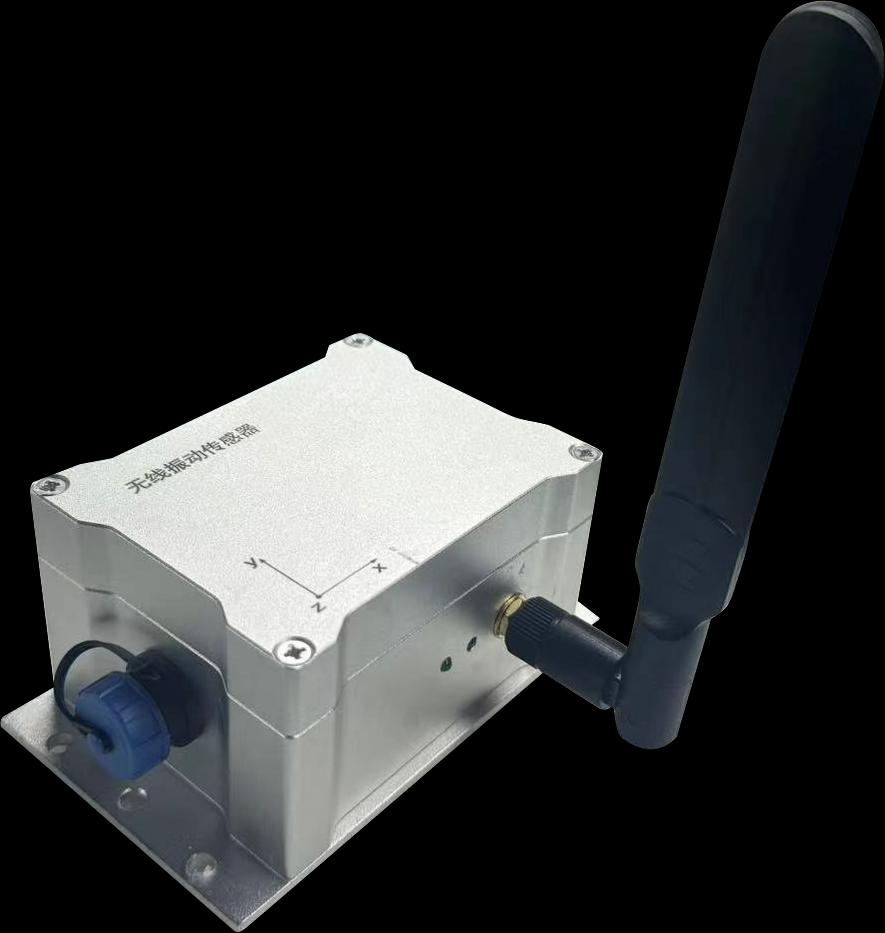
The CA-ZD62 is a triaxial integrated vibration sensor built around a high-sensitivity MEMS accelerometer with an ARM low-power control circuit and real-time high-speed data processing. It supports 4G and other band transmission and has a large internal storage unit so data is not lost during transmission interruptions. The sensor is moisture-proof and shock-resistant, with excellent stability and repeatability. Temperature and linearity are recompensated during manufacture, and short-circuit, transient over-voltage, polarity and surge protection are integrated, making it suitable for harsh industrial environments. A conformal-coated PCB and wide-temperature metal housing raise the product to an industrial grade. Typical applications include mine slopes, bridges, large-span structures, high-rise buildings and blasting vibration monitoring.
| Parameter | Value |
|---|---|
| Performance | |
| Measuring range | 2 / 4 / 5 / 10 g (selectable) |
| Resolution | 0.0001 g |
| Measurement accuracy | 0.1 %FS |
| Zero offset error | < 0.0002 g |
| Frequency response | 0 – 500 Hz |
| Shock limit | 1,000 g |
| Synchronisation accuracy | 0.1 ms |
| Output signal | Analogue |
| Zero-point temperature coefficient | 0.05 %FS/°C over −20 to +85 °C |
| Compensated temperature range | 0 – 70 °C |
| Long-term stability | 0.1 %FS/year |
| AD resolution | 16 bit |
| Mean time between failures | ≥ 50,000 hours |
| Insulation resistance | ≥ 100 MΩ |
| Shock resistance | 10 g @ 11 ms, three axes (half-sine) |
| Weight | ≤ 250 g (excluding antenna) |
| Electrical | |
| Supply voltage | 5.0 V min / 12.0 V typical / 28.0 V max |
| Battery capacity (standard) | 5,600 mAh |
| Operating current | 600 mA (typical) |
| Standby current | 40 mA (typical) |
| Charging temperature | −20 to +70 °C |
| Operating temperature | −20 to +70 °C |
| Storage temperature | −40 to +70 °C |
Three-axis acceleration curves sampled at 200 Hz for detailed waveform capture.
Frequency spectrum plots for identifying dominant vibration frequencies.
Velocity integration from acceleration records, supporting vibration severity assessment.
One-click generation of a vibration analysis report.